Let’s Talk
(+91) 9513855933



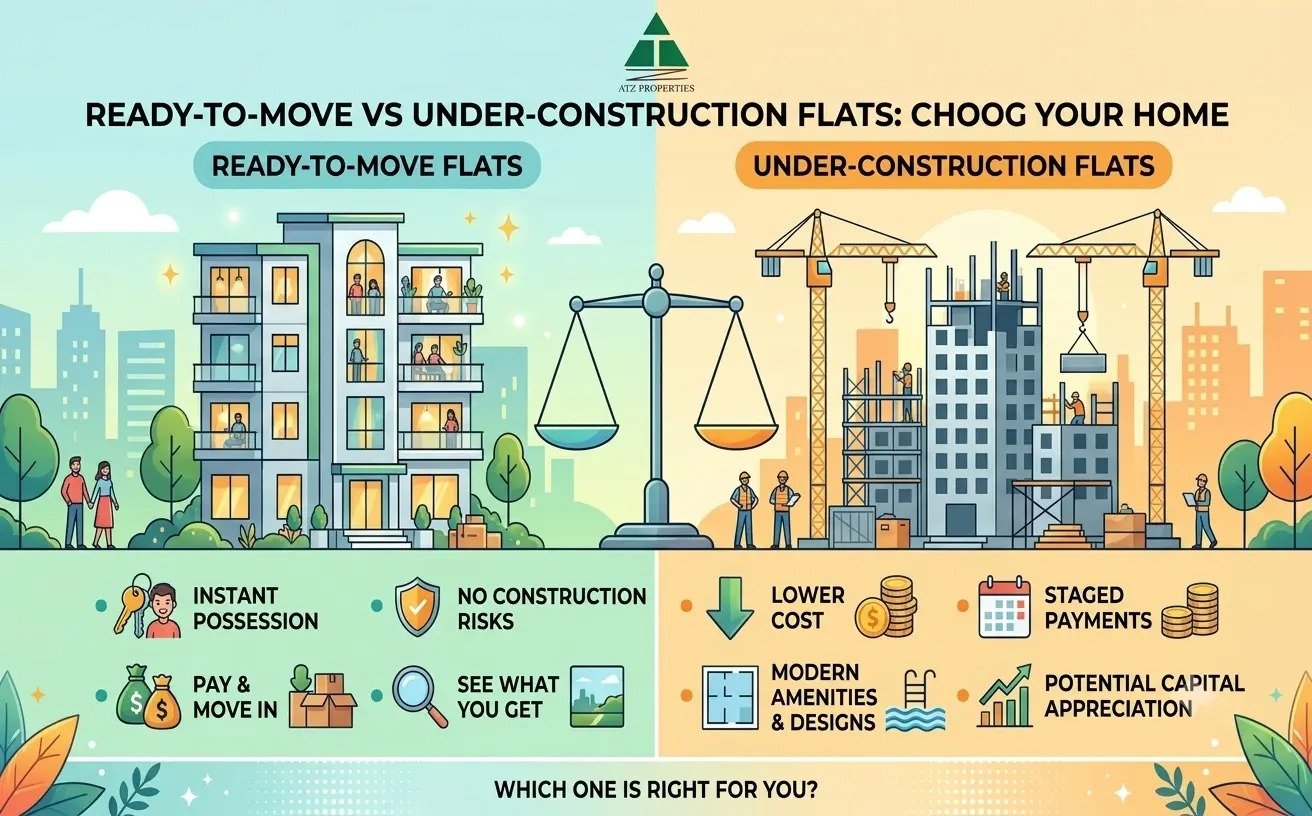
When purchasing a home, one of the most important decisions buyers face is choosing between ready-to-move flats and under-construction apartments. Whether you're a first-time homebuyer or an experienced investor, understanding the differences between these options can help you make a profitable and stress-free decision.
Both property types have their own advantages. Ready-to-move flats provide immediate possession and lower risk, while under-construction apartments often offer lower prices and greater appreciation potential. In this comprehensive home buying guide, we'll compare both options and share valuable property buying tips to help you make the right real estate investment.
Ready-to-move flats are completed residential properties that are available for immediate occupancy. These homes have received the necessary approvals and completion certificates, allowing buyers to inspect the actual property before purchasing.
Benefits of Ready-to-Move Flats
1. Immediate Possession
One of the biggest advantages of ready-to-move flats is that buyers can move in immediately after completing the purchase formalities.
2. No Construction Delays
You don't have to worry about project delays, changes in plans, or unexpected construction issues.
3. Physical Inspection
Buyers can inspect the flat, building quality, amenities, and neighborhood before making a decision.
4. Immediate Rental Income
Investors can start earning rental income as soon as the property is purchased.
5. Reduced Financial Stress
Homebuyers can avoid paying rent and home loan EMIs simultaneously for a long period.
Challenges of Ready-to-Move Flats
Higher purchase prices compared to under-construction properties.
Limited customization options.
Fewer unit choices in popular locations.
Under-construction apartments are residential units that are still being developed and will be delivered upon project completion.
These properties are popular among investors and budget-conscious buyers because they often come at a lower cost.
Developers usually offer attractive prices during the pre-launch and early construction phases.
Construction-linked payment plans make it easier for buyers to manage their finances.
Property values often increase significantly between project launch and possession.
Early buyers can select preferred floor plans, views, and unit locations.
Most new projects include smart security systems, clubhouses, fitness centers, landscaped gardens, and sustainable features.
Possible project delays.
Market fluctuations affecting investment returns.
Dependence on builder credibility and project execution.
Under-construction apartments generally cost less than ready-to-move flats in the same area. Builders often provide launch offers and flexible payment options.
Best Option: Under-Construction Apartments
Possession
Ready-to-move flats offer immediate possession, while under-construction projects may take several months or years to complete.
Best Option: Ready-to-Move Flats
Risk
Ready properties carry lower risk because buyers can physically inspect the property before purchasing.
Best Option: Ready-to-Move Flats
Return on Investment
Under-construction apartments often deliver better capital appreciation if purchased during the early stages of development.
Best Option: Under-Construction Apartments
Rental Income
Ready-to-move flats can generate rental income immediately.
Best Option: Ready-to-Move Flats
Under-construction projects may allow buyers to customize layouts, flooring, and fixtures before completion.
Best Option: Under-Construction Apartments
The answer depends on your financial goals.
You need a home immediately.
You want a low-risk investment.
You prefer seeing the actual property before buying.
You are looking for immediate rental income.
You have a flexible timeline.
You want a lower entry price.
You are seeking long-term appreciation.
You want access to modern project amenities.
Many successful investors include both property types in their portfolios to balance risk and returns.
Regardless of the property type you choose, these property buying tips can help protect your investment.
Always evaluate the builder's reputation, completed projects, customer reviews, and delivery track record.
Verify Legal Approvals
Ensure the property has:
Building approvals
Regulatory registrations
Completion certificates (for ready properties)
Location is one of the most important factors affecting property value.
Look for areas with:
Schools and colleges
Hospitals
Shopping centers
Public transportation
Employment hubs
Future infrastructure projects
Beyond the base price, calculate:
Registration charges
Parking fees
Maintenance deposits
Clubhouse charges
Home loan fees
Interior costs
Areas with upcoming metro lines, highways, IT parks, and commercial developments often experience higher appreciation rates.
A low price should never be the only reason to choose a project.
Overlooking Legal Documentation
Failure to verify approvals can lead to legal complications later.
Not Planning Finances Properly
Always account for additional expenses and future EMIs.
Focusing Only on Price
The cheapest property may not always provide the best long-term value.
A well-located property often outperforms cheaper alternatives in terms of appreciation and rental demand.
Choosing between ready-to-move flats and under-construction apartments depends on your financial situation, investment objectives, and personal preferences.
Ready-to-move flats offer certainty, convenience, and immediate occupancy, making them ideal for end-users and risk-averse investors. Under-construction apartments provide affordability and stronger appreciation potential, making them attractive for long-term wealth creation.
By following this home buying guide and implementing these property buying tips, you can make a confident and informed real estate investment decision that supports your financial goals for years to come.
Both have advantages. Ready-to-move flats offer immediate possession and lower risk, while under-construction apartments typically provide lower prices and higher appreciation potential.
2. Are under-construction apartments a good real estate investment?
Yes. If purchased from a reputed developer in a promising location, under-construction apartments can generate significant capital appreciation over time.
3. Do ready-to-move flats cost more than under-construction apartments?
Generally, yes. Ready-to-move flats are often priced higher because buyers receive immediate possession and face lower investment risks.
4. Can I earn rental income from an under-construction apartment?
No. Rental income can only begin after possession and completion of the project.
5. What should I check before buying a flat?
Verify legal approvals, builder reputation, project location, amenities, connectivity, future growth potential, and total ownership costs.
Yes. First-time buyers often prefer ready-to-move flats because they offer greater transparency and lower uncertainty.
Focus on location, developer reputation, infrastructure development, rental demand, and future appreciation potential.
8. What are the most important property buying tips?
Research the developer, verify legal documents, understand all costs, assess location advantages, and align your purchase with your long-term financial goals.